

[Change Knowledge] Why Higher Education Needs Change Management
Updated: Jul 29
Higher education is in a paradoxical position. On one hand, institutions are expected to provide safer, more convenient, and more personalized digital experiences. On the other hand, campuses are still filled with legacy processes, outdated systems, complex governance structures, and deeply ingrained work habits. New systems can be purchased and processes can be redesigned, but user adoption, understanding, and trust cannot be achieved with a single announcement.
This is precisely why change management is becoming increasingly important in higher education. It’s not about putting a prettier wrapper on a project, nor is it simply about sending a few more emails. It is a systematic approach to helping faculty, students, administrators, and various departments truly understand, participate in, and integrate new practices into their daily work.

The Pressure for Change in Higher Education is No Longer Just a Technical Issue
The challenges facing institutions are rapidly increasing. Information security, privacy protection, the student digital experience, online learning, administrative system updates, data governance, and compliance requirements—each involves different departments and stakeholders.
The problem is that many institutions still handle today's changes in yesterday's ways. A new platform goes live, but training is insufficient. A new process is launched, but frontline staff don't know why it's changing. A new policy is written comprehensively, but students and faculty stick to old habits.
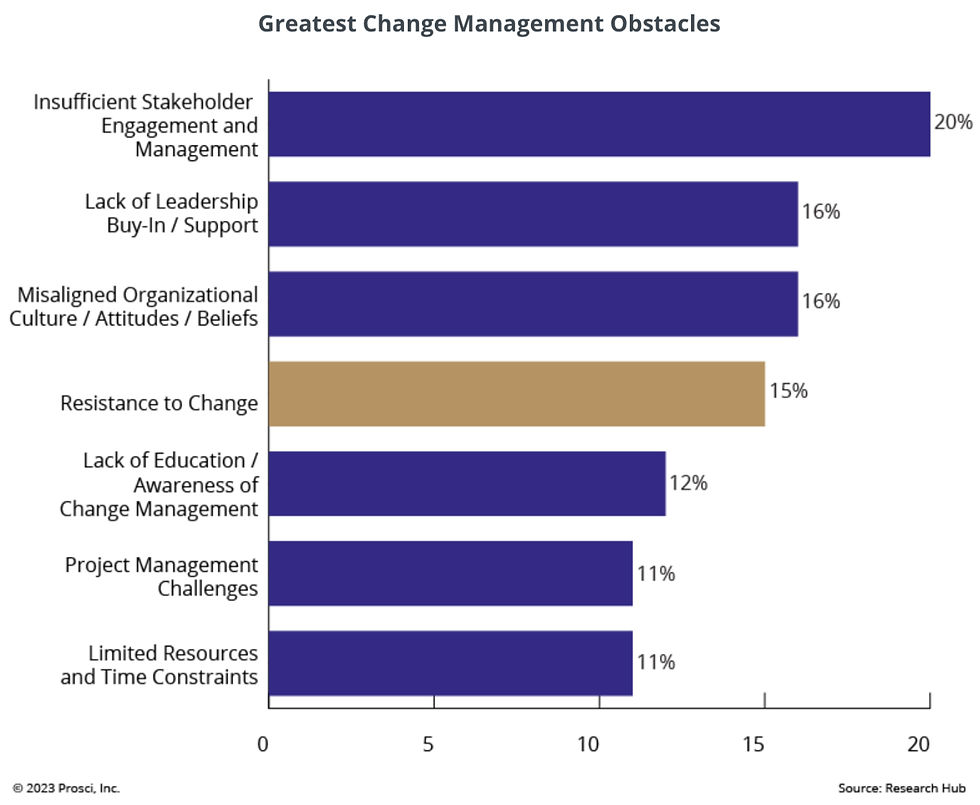
Relevant data from Prosci indicates that only about 13% of institutions are actively addressing these transformation challenges. This figure doesn't reflect a lack of effort in higher education, but rather the immense difficulty of driving change in traditional institutions.
Higher education is different from a typical business. Universities and colleges often have more decentralized decision-making structures, with academic departments enjoying a high degree of autonomy. Administration, teaching, research, and student services each operate at their own pace. Any major change can simultaneously affect:
How faculty teach and assess
How students apply for services and access information
How administrative staff handle finance, HR, and procurement
How IT teams support systems and data
How leadership measures performance and risk
If change is viewed merely as "system implementation" or "project delivery," the transformation can easily remain superficial. The real difficulty lies in getting people in different roles to willingly change their ways of working and to believe the change is worth their time and effort.
Change Management Bridges the Gap to People's Ability to Adopt
Many institutions are already familiar with project management. Project management focuses on timelines, budgets, scope, risks, and deliverables. These are very important, but they are not enough.
Change management focuses on another question: Are people truly ready to adopt the new way?
A new student information system can go live on time, but if faculty don't know how to use it, students still can't find the services they need, and departments are still using old forms and manual workarounds to compensate, the project is not truly successful.
The value of change management lies in connecting technical changes with personnel adoption. It addresses several core questions:
Who will be impacted?
What do they need to know?
Why might they resist?
What support do they need?
How should leaders and direct supervisors guide them?
How will new practices be tracked, reinforced, and improved?
In other words, change management moves a project from "implementation complete" to "successful adoption."
Institutions that adopt the Prosci methodology can increase their likelihood of meeting objectives by 7 times. This highlights that the success of a change often depends on whether people truly adopt it, not just whether the system has been launched.

Clear Communication Reduces Confusion and Resistance
In campus change initiatives, chaos often stems from inconsistent messaging. Different departments hear different versions, frontline staff face problems before management does, and students only see service changes without understanding the reasons behind them.
Clear communication is not a one-way announcement; it's about continuously building understanding. Good change communication should answer several questions:
Why are we changing?
What are the risks of not changing?
Who will be affected by the change?
When will it happen?
What support is available?
How will feedback be heard and addressed?
Higher education particularly needs this clarity. Faculty care about academic freedom and teaching quality, administrative staff care about process stability and workload, and students care about whether services are convenient, fair, and accessible. The same change means different things to different groups.
Change management helps institutions design targeted communications for different audiences, rather than sending a single, lengthy announcement to everyone. This reduces speculation and allows stakeholders to raise their real concerns earlier.

A Structured Approach Means Change Doesn't Rely on Individual Heroes
In the past, the success of change in many institutions depended on a few passionate project leaders or administrative heads. They were familiar with the campus culture, knew who to talk to, when to communicate, and how to minimize pushback. However, when these individuals change roles, retire, or become overloaded, the institution's capacity for change is lost.
Structured change management can turn experience into a repeatable methodology. It doesn't eliminate the complexity of higher education, but it provides clear steps and a common language so that different projects don't have to start from scratch every time.
A mature methodology typically includes:
Change impact assessment
Stakeholder analysis
Sponsor and leadership engagement plan
Communication and training plan
Resistance management
Adoption tracking
Performance review and continuous improvement
These activities make change more visible and more manageable. When an institution can track who is ready, who still has doubts, and which department needs extra support, change is no longer just about "hoping everyone will cooperate."
Stakeholder Engagement Ensures Change is Not Just Top-Down
The governance culture of higher education values participation, discussion, and autonomy. This is both a strength and a challenge for change. If an institution designs change as a purely top-down directive, it can easily provoke resistance and even cause a valuable initiative to lose support.
Truly effective change management involves stakeholders early on. This doesn't mean every decision requires endless debate, but it does mean giving those affected a chance to understand the direction, identify risks, point out practical constraints, and participate in the solution.
For example, when implementing a new learning management system, the IT team may know the technical requirements best, the academic affairs department is familiar with course processes, faculty know the teaching scenarios, and students can best reflect the user experience. Without any one of these parties, the solution is likely to have blind spots.
The purpose of stakeholder engagement is to make the change more relevant to real-world use cases. When people feel they were part of the design process rather than being forced to accept an outcome, the chances of adopting the new practice are naturally higher.
Minimizing Operational Disruption is a Key Benefit for Higher Education
Institutions do not have the luxury of "shutting down to transform." Semesters continue, students need to register, classes must be held, research must be submitted, and finance and HR processes must run as usual. Any major change, if handled poorly, can lead to service delays, work backlogs, and a decline in trust.
Change management can protect daily operations during a transformation. Through readiness activities, phased adoption, pilot testing, support channels, and feedback mechanisms, it reduces the shock of going live.
This is especially important in scenarios like:
Replacing finance or HR systems
Implementing a student information system
Updating an online learning platform
Rolling out new data privacy processes
Changing academic approval or curriculum management processes
Launching cross-campus shared services
The cost of operational disruption is often more than just financial. It also affects the student experience, employee morale, and trust in the next change initiative. Every chaotic transformation increases resistance to the next one.

Four Common Change Management Challenges in Higher Education
Change is difficult in higher education not just because systems are large, but because culture, governance, and people's adoption are intertwined. The following four challenges are the most common.
1. Lack of a Consistent Change Process
Many institutions run multiple projects simultaneously, but each uses a different approach to communication, training, and resistance management. As a result, stakeholders have to adapt to different rhythms, and management finds it difficult to compare effectiveness. A consistent process doesn't mean all projects use the same template, but that they are built on common principles.
2. Accumulating Change Fatigue
When faculty and students are constantly faced with new platforms, policies, and processes—each time without clear explanations or adequate support—fatigue quickly sets in. People may not oppose the change itself; they may just be losing patience with "another unprepared change." Change management helps institutions review their change portfolio to avoid overwhelming the same groups with too many initiatives at once.
3. Disconnect Between Technical Change and People Adoption
The technical team may complete the configuration on schedule, but users are not yet ready. This disconnect is common in higher education, especially when projects spend most of their time on system setup and leave training and adoption to the final weeks before launch. A good change plan brings adoption work forward.
4. Insufficient Leadership Engagement
Change needs visible support. If leaders only speak at the kickoff and then disappear, stakeholders will quickly doubt the initiative's importance. In higher education, a "sponsor" is more than just one senior executive. Department heads, faculty leaders, project managers, and key opinion leaders can all influence adoption. Change management helps these roles understand their responsibilities and act at the right time.
What is Real Change Management?
Change management is often misunderstood as just communication, training, or project administration support. These are parts of it, but they are not the whole picture.
It Deals with Acceptance and AdoptionLaunching a new system is just the beginning. The real goal is to make people willing to use it, know how to use it, and still choose the new way of working under pressure. This requires understanding people's concerns.
It Aligns Projects with Institutional Culture
Every institution has a different history, governance model, and pace of work. A research university, a community college, and an online institution will not need the exact same change approach. Change management provides an adaptable methodology that focuses on people and context.
It is a Long-Term Capability
If an institution has to relearn how to communicate, manage resistance, and drive adoption for every new change, it wastes a tremendous amount of energy. When change management becomes an in-house capability, the organization can respond more quickly to external pressures and more steadily drive internal improvements. This capability includes a common language, trained talent, clear roles, usable tools, and leadership support.

How Prosci Supports Higher Education Institutions
Prosci's approach to change management is people-focused and research-based. For higher education, Prosci's team of experts has both academic and practical backgrounds, enabling them to understand the needs of different roles on campus. This experience is critical because change in higher education cannot be sold with generic management jargon.
Prosci's solutions for higher education typically cover three areas:
Advisory Services: Helping institutions build a change management practice tailored to their culture and project portfolio.
Change Management Training: Providing clear skill-building for leaders, project teams, managers, and practitioners.
License and Tools: Enabling institutions to use established methods, tools, and a common language to reduce the burden of redesigning from scratch for every project.
Success Stories Reflect the Importance of Internal Capability
Prosci's case studies in higher education show that truly effective change usually comes not
from a single project, but from building an internal capability.
Texas A&M University had 70% of key stakeholders complete readiness activities four months before their Workday go-live.
University of California, San Diego brought the language and practice of change management to campus through large-scale training.
The University of Virginia embedded Prosci-certified change practitioners in different departments to be closer to those impacted by change.
The common thread in these cases is that the institutions did not treat change management as an add-on activity. They brought the capability inside the organization, allowing each project to build a foundation for the next success.
Institutions Should Place Change Management Before the Project Begins
Many change initiatives run into trouble not because of mistakes made during execution, but because the human impact was underestimated from the start. If an institution waits until just before training to discuss adoption, it's usually too late.
A more mature approach is to integrate change management at the very beginning of a project. When an institution evaluates a new system, process, or policy, it should simultaneously assess the people impact and adoption difficulty.
You can start with a few questions:
Which groups will be most affected?
How will the change rewrite their daily work?
Who is most likely to support or resist?
Which leaders need to be prepared first?
What messages must be delivered by senior leadership?
What skills need to be built before go-live?
How will successful adoption be measured?
These questions make project plans more realistic. They also help leadership see that change management is not an extra cost, but a way to protect their return on investment.
Digital Transformation Must Synchronize with People Transformation
The digital transformation of higher education will continue to accelerate. AI, online learning, cybersecurity demands, data analytics, and student expectations will constantly push institutions to change. However, technology alone cannot guarantee a successful transformation.
What institutions truly need to build is a capacity for continuous adaptation. This capacity ensures that people know why a change is happening, how it affects them, and where to find support, while also enabling leadership to see resistance and risks earlier.
Change management is like a compass that helps an institution maintain its direction during a complex transformation. It connects strategy, projects, and people's adoption, ensuring that change is not just implemented, but understood, accepted, and sustained.
The success of higher education has never come from just systems and structures, but from whether every member can move forward through change. When institutions place the successful adoption by their people at the core, digital transformation finally has a chance to deliver real results.


Comments